
Dry is not the opposite of sweet.
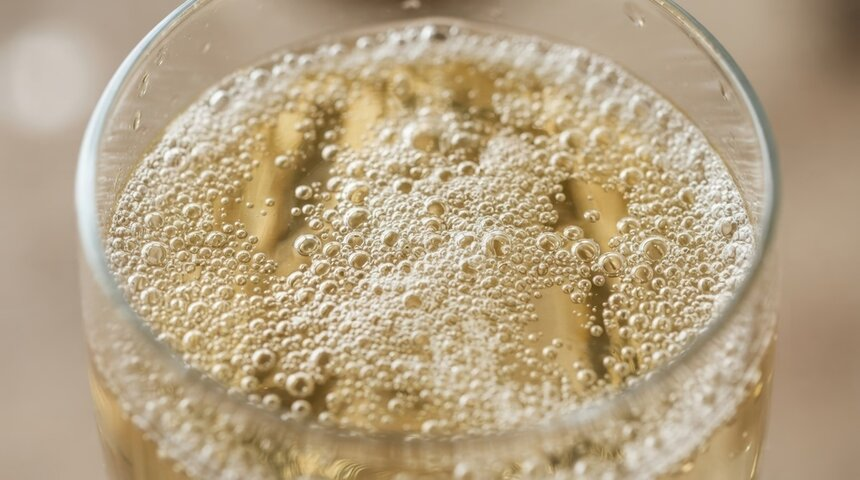
It's the most used word on every drinks menu, and one of the least understood. Dry has a precise meaning. It's a measurement — not a taste. Here's what it actually says about what's in your glass.
You've asked for something "not too sweet" and been handed something sweet anyway. You've ordered a dry wine and found it rich and round. You've seen "Extra Dry" on a bottle of Prosecco and assumed that meant — well, extra dry. It doesn't. Extra Dry Prosecco contains more residual sugar than Brut.
That's not a labelling error. It's a window into what "dry" actually means in drinks — which is more specific, and more useful, than how most people use it.
A measurement, not a sensation
Dry describes residual sugar — specifically, how much sugar remains in a drink after fermentation is finished. When yeast consumes almost all the available sugar, the result is dry. When fermentation stops with sugar still in the liquid, the result is off-dry, medium, or sweet depending on how much. Dry is the end of a process, not a description of how something tastes.
This matters because dryness and sweetness perception are not the same thing. A drink can be technically dry and not taste particularly crisp. It can carry significant residual sugar and still taste lean. The label tells you one thing. Your palate might tell you something else entirely. Both can be correct.
Three drinks that prove it
Prosecco Extra Dry — The label implies drier than Brut. Reality: Extra Dry contains 12–17 g/L residual sugar, more than Brut (under 12 g/L). The category was named before labelling was standardised.
Riesling Spätlese — Late harvest, sounds sweet. Often has 20–40 g/L RS — but high acidity can make it taste surprisingly crisp, even "dry," to most palates.
Dry Martini — "Dry" here refers to the proportion of vermouth, not the sugar content. More gin, less vermouth. Vermouth is the wet element.
The three things that shape how sweet a drink tastes
Sweetness perception isn't just about sugar. Three other things adjust what you actually taste.
Acidity. High acidity suppresses sweetness. A wine or cider with significant residual sugar but sharp acidity can taste lean and crisp — "dry" in the sensory sense, even though it isn't technically. This is the Riesling effect: grapes from cold climates retain both high sugar and high acid, and the acid often wins on the palate. The same principle explains why a sour beer with added fruit can taste tart rather than sweet.
Tannin. Tannin creates a drying sensation on the gums and cheeks regardless of the sugar level in the glass. This is why a full red wine — technically dry — can taste grippy and austere. The tannin is doing something that your brain files under "dry" even though that's not what the word means on the label.
Carbonation. Fizz makes drinks taste drier and more acidic than they are. Carbon dioxide dissolves in liquid as carbonic acid. A lightly sweet sparkling cider at the same sugar level as a still cider will taste noticeably less sweet. This is partly why Champagne and sparkling wine producers can use higher dosage (added sugar) without the result tasting obviously sweet — the bubbles compensate.
The practical version: a drink that tastes dry isn't necessarily dry. A drink that is dry doesn't necessarily taste it. The label and the sensation are measuring different things — and both pieces of information are useful if you know which one you're reading.
How it works across categories
Wine. Dry means residual sugar below roughly 4 g/L (sometimes up to 9 g/L if acidity is high). Off-dry, medium, and sweet follow from there. The Prosecco naming quirk aside, most wine labelling is consistent — Brut is drier than Extra Dry in sparkling wine, but dry and brut are effectively synonymous in still wines.
Cocktails. Dry in a cocktail context usually describes the proportion of the sweet element. A dry Martini has less vermouth. A dry Manhattan has less sweet vermouth relative to whisky. It can also describe the overall profile of a drink with no added sweetener — a daiquiri with no sugar syrup would be "dry." The spirit itself is almost always dry. The question is what's mixed with it.
Beer. Dry refers to attenuation — how fully the yeast consumed the fermentable sugars. A highly attenuated beer has little residual sugar and a lighter, crisper body. Irish dry stout is the canonical example: bone dry, but bitter and roasty — not what most people picture when they hear "dry." Lactose-based milk stouts are the opposite: low attenuation, residual sweetness, a fuller mouthfeel.
Cider. Closest to wine in how dry is measured and labelled. Dry cider has low residual sugar and often higher tannin from the apple varieties used — which compounds the drying sensation. A dry farmhouse cider can taste astringent, earthy, and nothing like apple juice. The residual-sugar scale runs similarly to wine: dry, off-dry, medium, sweet.
What this means when you're writing a note
Most tasting notes use "dry" to mean "not sweet-tasting." That's fine as a shorthand — everyone understands what you mean. But there's a more useful distinction available once you know the difference.
A note that says "dry finish" describes a sensation. A note that says "technically dry, but the fruit makes it feel rounder than expected" describes something more specific — the gap between what the drink is and how it presents. That gap is often the most interesting thing about a drink, and it's invisible if you only have one way to describe it.
Next time you reach for "dry" in a note — or on a menu — it's worth asking which question you're answering. Whether the drink has residual sugar is one thing. Whether it tastes lean and crisp is another. Both matter. They just don't always travel together.